Tuesday, 16 September 2014

Scream Deconstruction

Scream Basics
  • Director: Wes Craven
  • Writer: Kevin Williamson 
  • Synopsis: A masked killer begins murdering teenagers in a small town, and as the body count rises, one girl and her friends contemplate the "rules" of horror films as they find themselves living in a real-life one.
Scream is very much aware that it is a movie, and has fun with this. The film features numerous in-jokes and references to other horror films. The victims in Scream are quite self-aware: they each make clear their familiarity with, and make fun of, teen slasher and horror films, which sets up their fairly ironic responses to the film's situations. 

Randy seems almost unable to tell the difference between a movie world and his own world. He compares what is going on to situations in horror films, and at one point even says: "If this was a scary movie, I would be the main suspect." Randy is also the one who puts forward his "Rules For Surviving a Horror Movie;" he eventually believes that the only reason he himself survives is because he's a virgin (almost subverting the 'Final GIRL' theory). The Final Girl theory is also subverted through Sidney, who although not as loud-mouthed or overtly sexual as her female counterpart, she is attractive and has reasons for not wanting to engage in sexual activity (her mother died and has not since felt comfortable). However, she does decide to give up her virginity towards the end of the film and so is breaking the mould and practically mocking the usual slasher conventions. 
A signature device, started in Scream and continued in Scream 2 and Scream 3, was the typical "rules" for the slasher sub-genre of horror movies being stated by the characters. In Scream, those rules (as described by Randy) are:
  • You may not survive the movie if you have sex.
  • You may not survive the movie if you drink or do drugs.
  • You may not survive the movie if you say "I'll be right back", "Hello?" or "Who's there?"
  • Don't answer the phone
  • Don't open the door
  • Don't try to hide

Most notable of all, the climactic scene of the film revolves around the characters watching the movie Halloween, unaware that they themselves are being watched on a hidden camera with a time delay (placed there by Gale). At one point Randy yells at the movie: "Look behind you, Jamie", unaware that there is also a killer behind him, again playing into the whole self-aware theme that Scream has. Kenny (the camera man) watches this from inside the news van, and also yells: "Behind you, kid." despite the time delay meaning the warning is just as pointless as Randy's, who is inside watching the film. The result is: a movie character (Kenny) watching what the hidden camera in the room shows, giving advice to another movie character (Randy), also watching a movie, also giving advice to a movie character (in the movie he's watching). 


Billy also comments that life is just "one big movie. Only you can't pick your genre." Loomis also references several other horror films e.g. When Billy shoot's Randy he says "Anthony Perkins, Psycho" and even quotes Psycho saying "we all go a little crazy sometimes". When talking about motives, Loomis describes how several famous horror villains didn't appear to have motives e.g. why did Hannibal eat people? He even says, 'It's a lot scarier when there's no motive, Sid'. 
Two of the most common references are to A Nightmare on Elm Street and its director Wes Craven. A Nightmare on Elm Street is referenced in the high school janitor. Fred, played by Craven, wears an outfit resembling Freddy Krueger's. Later in the film, Tatum tells Sidney that she is "sounding like a Wes Carpenter flick", a fictional name created from putting together the names Wes Craven and John Carpenter (director of the first Halloween film).

Friday, 12 September 2014

Friday 13th Deconstruction


Trailer opens with the appropriate production companies for the film.

A panning shot leads to an establishing shot of lake. Here it is clear to the audience that the setting for the film will be in a rural, forest setting. Followed by a close up shot of teenagers in a car, it is clear that this film will follow the stereotypical slasher plot of 'teens on spring break in a cabin in the forest.'

Dissolve transitions show scenes of them having fun. The audience can see glimpses of them being rebellious by doing things such as drinking alcohol and being promiscuous.

Straight cuts of them having fun in the water build until the sudden appearance of a masked figure between the trees. An over the shoulder shot of the man in woods shows him staring at the blonde girl in the water. A close up of girls face at water level allows the audience to see her panicked and frightened expression.

-Text on the screen shows the name of the producer.

A panning shot shows missing posters of the girl in the water. It becomes obvious to the audience that the man from the woods has made the girl his first victim.

Quick straight cuts show the dark forest setting, which is unsettling to the audience who are unaware of what is lurking in the shadows.

The screen fades to black before showing an extreme close up shot of the girl screaming with an on-screen diegetic high pitched scream.

- Text shows the name of the director of the movie- 'from the director of.'

The camera zooms in on a tent in the woods, cutting to a close up of the characters inside, accompanied by diegetic loud breathing as a dark shadow on the tent passes behind them. It is up to the audience to imagine what happens to these characters next as they know that the killer has 'found' these characters.

A long shot shows a girl in the cabin, followed by a long shot of the cabin as the lights go out, building tension.

There is a non-diegetic 'pulse/heartbeat' sound, that goes well with the building tension.

Straight cuts of disturbing scenes increase, as does music, This begins to create a sense of urgency, and makes the audience feel tense and uncomfortable.

The music stops and a close up shot shows a girl in low key lighting, with a hand covering her mouth.
After a non-diegetc quiet boom, the screen fades to black.

There is silence (distressing to audience as they know something is building) before a mid-shot of a girl pulling back the curtains to reveal the killer, with a loud non-diegetic bang.

-Numbers appear on the screen as a countdown begins.

After each number appears on the screen, the scene shows each of the characters dying. The numbers then begin to get quicker.

-Text appears showing the film title (accompanied by non-diegetic talking.)

-Text shows film information.

-Text shows the films release date.


Nightmare on Elm Street Deconstruction


The trailer opens with the appropriate production companies for the film.

There is an establishing shot of tall, dark factories, accompanied by the diegetic sound of the wind blowing.

A straight cut to a long shot of a teenage boy running is the first introduction of the villain to the audience. It cuts to a mid-shot of the character with the on screen, diegetic sound of the cars following him in the background.

There are various straight cuts of long shot camera angles showing the boy being attacked inside of a large warehouse.

A mid-shot shows a fire engulfing the warehouse, with straight cuts to close ups of faces belonging to those outside of the warehouse, attacking the boy.

-Text appears on the screen showing the name of the producer of the film.

A long shot of young girls playing is accompanied by a non-diegetic narrative (little girls voice.)

The straight cuts continue, joined by the non-diegetic sound of a  young child singing. This is stereotypical of films of the horror genre as the sound of an innocent young child's voice accompanying disturbing and horrifying scenes is upsetting to the audience.

There is a close up shot of the well known 'claw' scratching metal pipes on the wall, with crashing and scratching sound adding to the chaos scene.

There is a close up shot of the girl sitting in her car holding the car lighter, followed by the graphic sound of the lighter burning her skin with her screaming. This is followed by a long shot of a funeral setting.

Straight cuts show disturbing scenes to the beat of a young child singing. As singing stops, a long shot of a man is shown, before there is a loud bang and a close up shot shows a hand grabbing the man's head.

Npn-diegetc swishing and chopping sounds begin to slow, before text appears showing the film title- 'The Nightmare on Elm Street.'


Tuesday, 9 September 2014

Halloween Deconstruction


Trailer opens with clips of appropriate production companies.

There is dark green light (dark green relates to the horror genre) with fading text in the bottom right. There is a non-diegetic narrative that begins.

There is a scene in the style of home video, making it seem slightly distorted, accompanied by non-diegetic technical failing sounds.

Narrative continues throughout changing scenes.

There is an establishing shot of the house. The house is typical of a slasher movie, as it looks very homely and this type of setting is more distressing for the audience.

There is a straight cut to a close up shot of a rat with a blade to it's head. This is the first sign to the audience of the characters unstable and twisted mental well being.
There is  then a close up shot of the boy getting a knife from the kitchen, letting the audience know that something gruesome is going to unravel.

The point of view shot of back of the woman allows the audience to 'view things from the killers perspective.'

There are various straight cuts showing different angles of the killing until there is a non-diegetic loud crash.

The close up shot of the hand touching the leg of a sleeping girl gives the audience the idea that the killer is twisted sexually and clearly shows that his mental thought process is socially ubstable.

There is a loud, high pitched scream, which is stereotypical to slasher movies. The straight cuts of scenes that follow begin to build, with tension increasing. They include screens of a girl hysterically crying, a close up shot of police lights and a long shot of girl looking out of a car window.

There is the image of the mask with text in front, followed by a mid-shot of the villain putting the mask on. Backlighting shows the outline of the mask. Backlighting is used a lot in movies of the horror genre as it creates a lot of mystery for the audience as not everything in the scene is clear. 

There is a close up shot of the killer in low key lighting, making him seem dark and frightening to the audience.

The camera starts shaking, again adding to the urgent build up of tension.

There is a long shot of the villain carrying a girl, with the use of backlighting meaning the audience can only see the outline of the two characters. This is useful in a trailer as it does not give too much away about the plot e.g the identity of the character being carried.

-There is text informing the audience who the writer of the film is- 'from writer of'

The straight cuts quicken further, showing more disturbing scenes.

-There is the build up accompanied by stereotypical, creepy horror music, until the title of film appears- 'Halloween'

There is a long shot of the house featured throughout the trailer. The camera quickly zooms to a mid-shot of the villain and another character struggling at the door of the house. This is accompanied by an on-screen diegetic scream.

-Text appears on screen informing the audience of the release date.


Monday, 8 September 2014

Slasher Conventions

Main Characters-

The Final Girl-
The final girl is the one out of her group of friends that survives all the villains attempts to kill her as he has done all of her friends. The final girl is always a virgin, and unlike her friends, never engages in sexual or illegal activities. She is often a brunette, and is extremely innocent and shy, building her confidence as the movie progresses.
Julie James- I know what you did last summer

Killer-
The killer is always masked due to the fact that he is physically deformed due to a past event e.g trouble childhood, fire, prank gone wrong etc (that unravels during the film.) The killer is always an unknown and male. He has a distinctive weapon and often leaves links between victims. The victims can sometimes be linked with the past of the killer e.g Prom Night.
Jason Voorhees- Friday 13th

Other frequent victims/group of friends-

Bimbo/cheerleader/prom queen/popular girl- 
The first to die is the popular girl, usually blonde. She is sexually active, and is often engaging in sexual activity or being overly provocative when she is murdered e.g The Cabin in the Woods.
Jules- The Cabin in the Woods

Jock
The Jock is often in an intimate relationship with the popular girl. He does not die straight away but engages in illegal activities that leads to his death eventually.
Curt- The Cabin in the Woods

Token black guy
There is not normally a lot of depth to this particular character. He usually dies second or significantly early on e.g Friday 13th.
Lawrence- Friday 13th

Nice guy
Despite being 'nice', this character still engages in rebellious activities (sex, drugs, drinking etc.) He normally survives longer than the others but dies before the final girl can defeat the villain e.g The Cabin in the Woods.
Marty- The Cabin in the Woods

The deaths of these characters can either be seen as a punishment for their behaviour, engaging in sex, drugs, excessive drinking etc, or due to them being unaware of their surroundings also due to their behaviour.

Adults-
Older wise man-
The benefactor appears throughout film giving subtle advice to the characters, although they do not always listen. Can eventually go on to help the final girl defeat the killer.


Unhelpful officer
Initiates the idea that the authorities are in fact useless, giving the illusion that the characters are on their own, adding to the horror for the audience (therefore linking to genre.) The authorities are thought to keep us safe, so not having them able to save the characters from the villain is unsettling.
Officer- Wrong Turn

Settings-

High school
Characters are often 'High School' age 15-18 years old. Although the actual killings do not always take place within the high school, it is often used within some scenes to give characters background and the audience a sense of normality to the teens.
Jennifer's Body

Small town
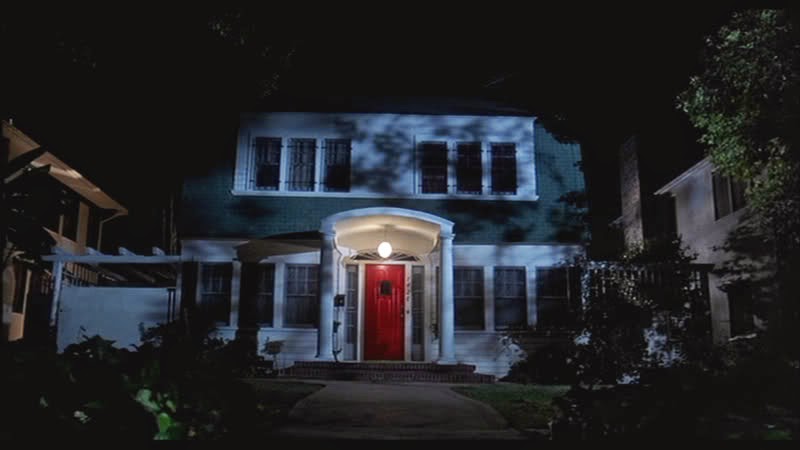
The use of a small town or suburb with family homes is disturbing to the audience, as they are familiar with this realistic setting and so it becomes more distressing e.g the thought of a masked killer watching the family home.
Nightmare on Elm Street

Forest
Usually teenage characters going to stay in a rural cabin on 'spring break.' The fact that the cabin is in the middle of the woods gives a sense of isolation that is unsettling for the audience.
Camp Crystal Lake- Friday 13th

Lighting-
Mostly dark
Mainly low key and back lighting to hide elements of the scene and provide mystery which builds tension within the audience, adding to the slasher horror genre.

Storyline
The storyline is usually simple as the main element are the killings being as graphic and upsetting to the audience as possible.

I Spit On Your Grave | Trailer deconstruction - genre


Teaser trailer deconstruction according to genre
  • An establishing shot of a log cabin in the woods, with low key ambient lighting is very conventional for a slasher film, as this is often the location used for a slasher film
  • A close-up shot of a sleeping woman accompanied by a non-diegetic off-screen creaking noise is also conventional of a slasher film and conveys to the audience that a killer or a character of that nature is going to harm the 'final girl'
  • A mid-shot frames the 'final girl' and the audience can see the costume, which is brown hair, a plain and unrevealing white top and basic makeup - all very conventional and connote purity, simplicity and innocence which are all conventional for the 'final girl' character
  • A close up shot frames the killer in the background with the 'final girl' having a scared and worried facial expression, clearly expressing to the audience that this is a slasher horror. Furthermore, some kind of editing has been used to 'mask' the frame, tying in with the fast straight-cut edits used to build tension within the trailer.
  • Style of font used is quite spaced out, white, has serifs, with black and grey background that matches the edit 'mask' used over some of the cuts - quite conventional, as dark and simple colours are often used in horror films. Text is used to describe the basic narrative of the plot - conventional for a teaser trailer
  • To build tension, several very fast straight-cut edits are used with non-diegetic sound which sounds like shutter noises, which is also heard in most horror trailers. The straight cut edits make the trailer seem more chaotic and jumpy, appropriate for the genre
  • A close-up of the 'final girl's face shows a much more raggid, dirty character, subverting the usual 'final girl' role and shows her becoming the antagonist, performing the brutal acts on her rapists, but the audience is invited to side with her almost
  • Close-up of feet stretched on floor, with old battered rope, blood on floor, and legs stretched apart is a clear indication of genre to the audience - mise en scene


Sunday, 7 September 2014

The Slasher Genre

In order to make a slasher I thought it would be useful to research the history of the genre, including some of the conventions and possible narratives. I wanted to understand the genre further so that we can decide whether want to make our piece more conventional or steer away from possible 'old' conventions and look into what is currently trending.

The Beginnings 
The original slasher movie is Alfred Hitchcock's classic, Pyscho (1960). Psycho presented us with the character Norman Bates, who was based on real life serial killer Ed Gein (he also inspired The Texas Chainsaw Massacre and others). The story is familiar to most, a woman flees her town after having stolen a large sum of money from her employer, and ends up staying at the Bates Motel, where she meets Norman. The iconic shower scene is famous for it's straight cut edits and sinister non-diegetic string music:
Notes by Hitchcock in the script about the shower scene:
Through the killing, there should be the shower noise and the blows of the knife. We should hear water gurgling down the drain of the bathtub, especially when we go closer it… during the murder, the sound of the shower should be continuous and monotonous, only broken by the screams of Marion.  

Most slasher movies from this point onwards started to follow a similar pattern, e.g. Halloween, Friday 13th, Nightmare on Elm Street. Another classic slasher movie is The Texas Chainsaw Massacre, released in 1974. This film was first banned in the UK for 20 years, although there's hardly any gore until the last ten minutes. Leatherface was also based on Ed Gein. This inspires me to perhaps base our killer off of an existing serial killer. Here the conventional killer can be found, as described in a previous blog post:
  • Disfigured
  • Masked 
  • Weapon of choice e.g. knife, chainsaw
  • Childhood trauma/revenge
  • Often silent and unstoppable
  • Will never die e.g. Freddie Krueger, Michael Myers
  • Stalking and killing 

Carol Clover


Carol Clover wrote the book 'Men, Women and Chainsaws', which focused on the positioning of what she calls 'The Final Girl' in relation to the audience. Most theorists label horror films as a male-driven genre, Clover points out that in a lot of horrors (especially slasher), the audience is 'forced' to identify with the Final Girl. While the dominant killer's subjective point of view may be male within the narrative, the male viewer is still rotting for the Final Girl to overcome the killer. We can see this operating in Halloween, Friday the 13th and A Nightmare on Elm Street. In horror films, women are usually murdered because of their having ha sex, or their desire for sex. 

From the book:
Final Girl. The image of the distressed female most likely to linger in memory is the image of the one who did not die: the survivor, or Final Girl. She is the one who encounters the mutilated bodies of her friends and perceives the full extent of the preceding horror and of her own peril; who is chased, cornered, wounded; whom we see scream, stagger, fall, rise, and scream again. She is abject terror personified. If her friends knew they were about to die only seconds before the event, the Final Girl lives with the knowledge for long minutes or hours. She alone looks death in the face; but she alone also finds the strength either to stay the killer long enough to be rescued (ending A) or to kill him herself (ending B). She is inevitably female. In Schoell's words: "The vast majority of contemporary shockers, whether in the sexist mold or not, feature climaxes in which the women fight back against their attackers—the wandering, humourless psychos who populate these films. They often show more courage and level headedness than their cringing male counterparts." 

Final Girls:

  • almost always a virgin / innocent
  • costume not provocative or sexually attractive, unlikely to be blonde
  • very sensible /studious, unlikely to partake in illegal activities 
  • dark hair / usually quite plain looking, no makeup etc
Wolf Creek

  • The story revolves around three backpackers who find themselves held captive and subsequently hunted by a serial killer in the Australian outback. 
  • Upon release, critics such as Roger Ebert dismissed the film for its raw depiction of violence, particularly against women, with several stating they walked out of their screening
  • Critic Roger Ebert gave it a rare zero stars rating, saying, "It is a film with one clear purpose: To establish the commercial credentials of its director by showing his skill at depicting the brutal tracking, torture and mutilation of screaming young women ... I wanted to walk out of the theatre and keep on walking".
  • The Independent praised its departure from the generic rules of the horror film genre. Time Out said "by making us feel the pain, Greg McLean's ferocious, taboo-breaking film tells us so much more about how and why we watch horror movies".
Modern/current trends in Slasher
  • A new kind of killer is emerging as discussed in previous posts, rather than having a more 'unstoppable', almost supernatural killer, normal everyday people are starting to become the killer e.g. in The Strangers. This makes it almost scarier for the audience as they can go home thinking ANYONE can be the Freddy Krueger or Michael Myers that they've always been scared of.
  • This can be seen in Scream, which I will do a whole other blog post on. 
  • More recently, 'torture porn' films e.g. Saw franchise and Hostel have become popular. What all of these films share is realism, through the amazing editing and Mise en Scene, the scenes appear very very real to the audience and sometimes it is unclear whose eyes the audience is looking through - victim or torturer?  
  • This article gave some interesting points:
http://www.theguardian.com/film/2007/may/01/gender.world